The Science of Binaural Beats
What Are Binaural Beats?
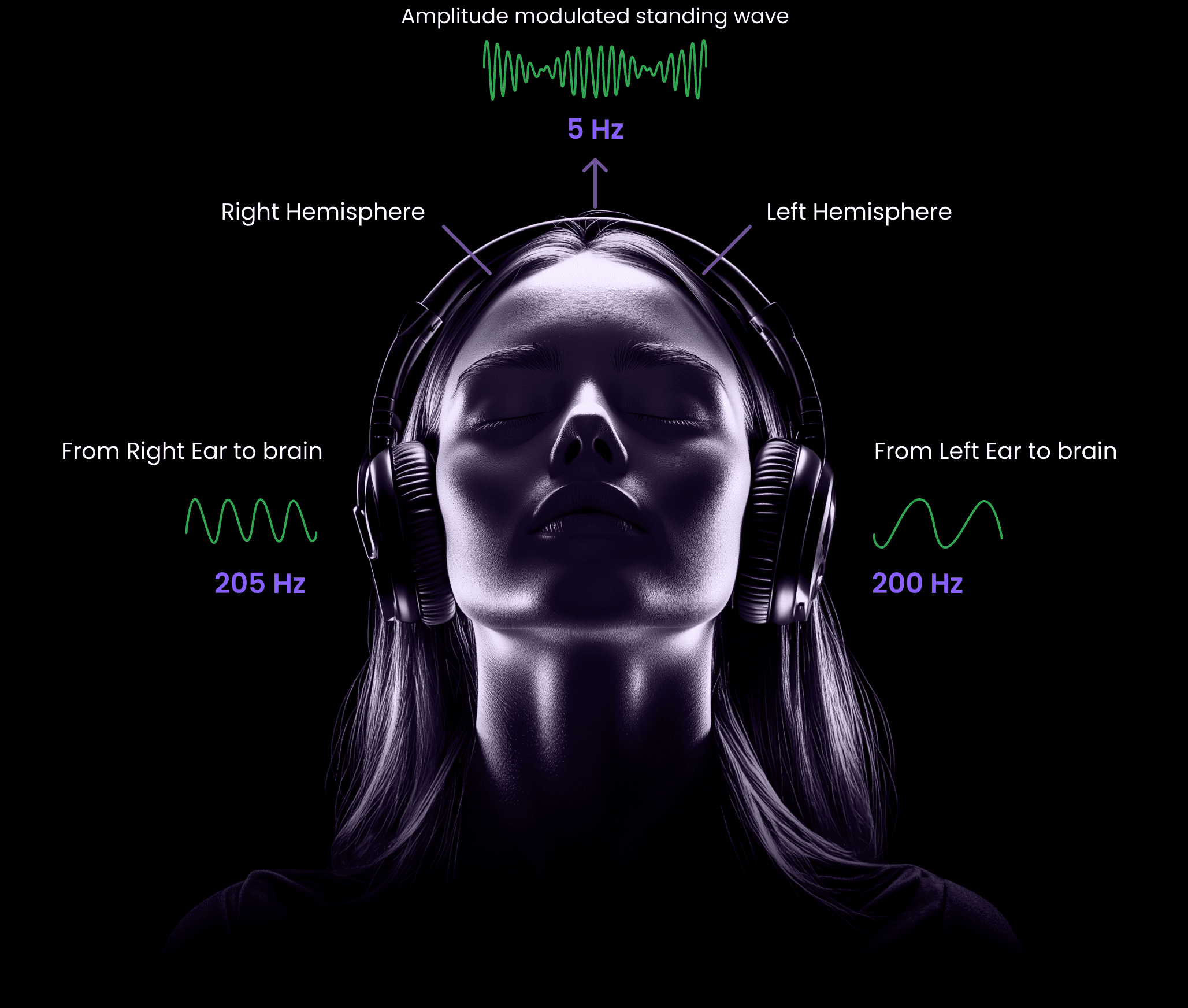
Binaural beats occur when two slightly different frequencies are played in each ear. Your brain perceives a third frequency — the difference between the two — and synchronizes its brainwave activity to match this perceived frequency. This process, called brainwave entrainment, helps the brain enter a desired state, such as relaxation, focus, or sleep.
How Binaural Beats Works
The brain operates on different frequencies depending on the state of mind.
Delta Waves
0.5-4 Hz
Linked to deep sleep and relaxation. Binaural beats in this range promote restorative sleep.
Theta Waves
4-8 Hz
Associated with light sleep, deep relaxation, and meditation. These frequencies help reduce stress and encourage creativity.
Alpha Waves
8-14 Hz
Promote calmness and relaxation, ideal for unwinding after a long day.
Beta Waves
14-30 Hz
Increase focus and alertness, useful for daytime productivity.
Gamma Waves
30+ Hz
Enhance cognitive performance and peak mental clarity.
&
Binaural Beats
Binaural beats are a unique feature of NightWhisper, setting it apart as a powerful tool for sleep, relaxation, and focus. This scientifically supported technique uses sound frequencies to influence brainwave activity, helping users achieve specific mental states. NightWhisper integrates binaural beats into its stories, meditations, and soundscapes to enhance their effectiveness.
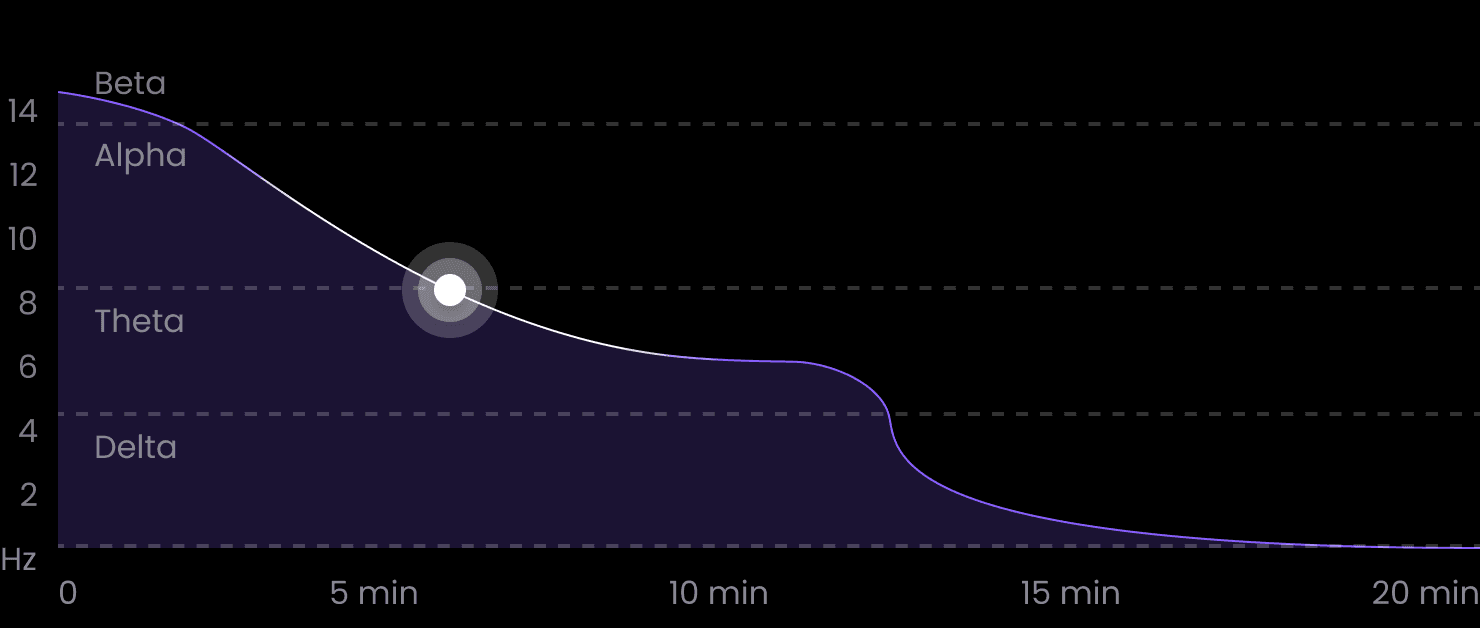
NightWhisper uses carefully calibrated binaural beats to help users achieve these states effortlessly.
Personalized Duration for Every Experience
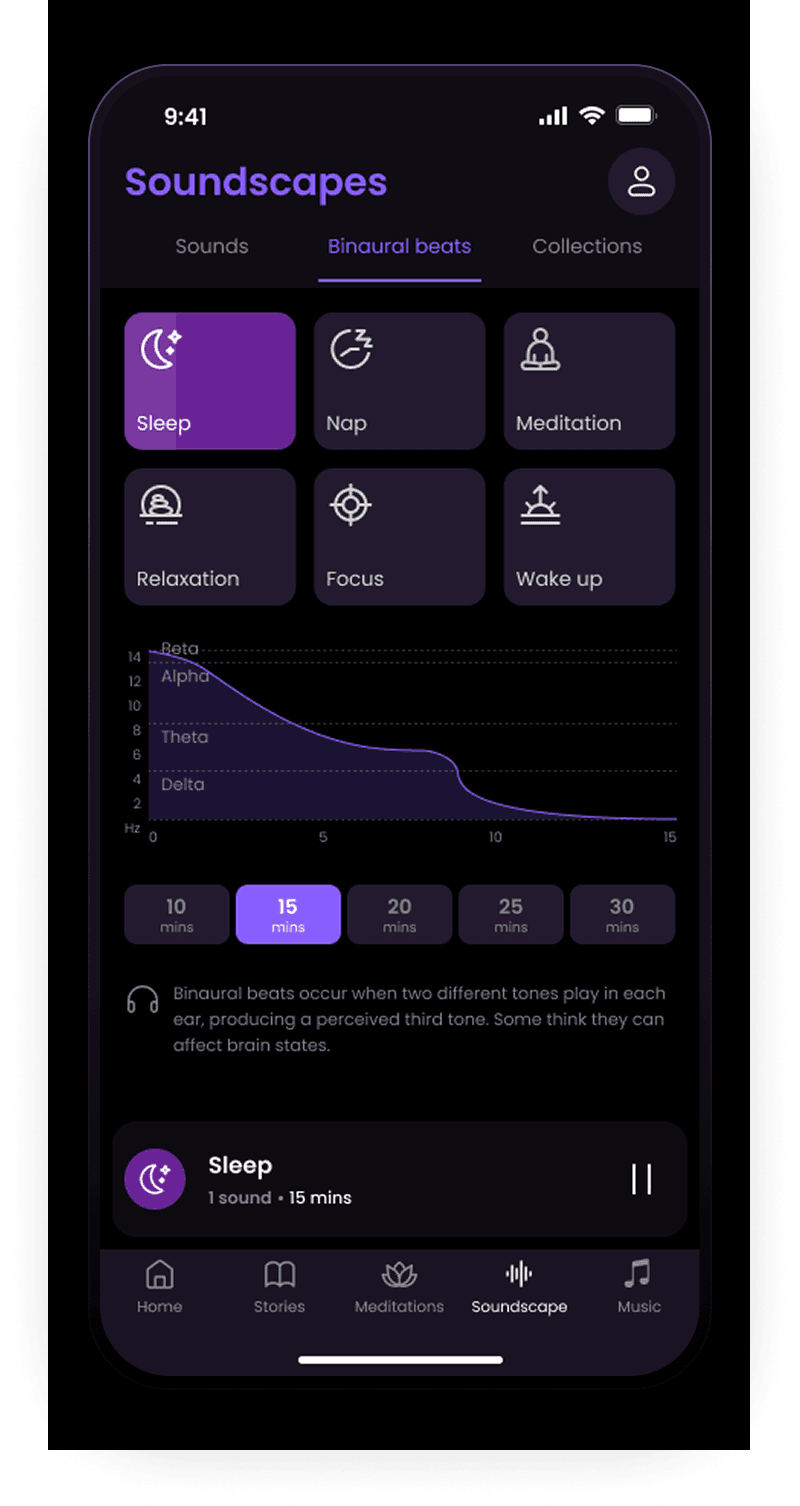
NightWhisper allows users to choose the duration of binaural beats to suit their needs, providing flexibility and personalization
Sleep and Nap:
10, 15, 20, 25, or 30 minutes to guide users into deep sleep or a refreshing nap.
Meditation and Relaxation:
10, 15, 20, 25, 30, or infinite minutes for a fully customizable experience.
Focus:
10, 15, 20, 25, 30, or infinite minutes to sustain productivity and concentration.
Wake-Up:
10, 15, or 20 minutes for an energizing start to the day.
Each story, meditation, or sound mix automatically adjusts its binaural beats to match the selected duration, ensuring a perfectly timed and effective experience.
Try now NightWhisper app




Benefits of Binaural Beats
Research has shown that binaural beats are effective for improving sleep quality, reducing stress, and enhancing focus. Here's how they can help:
Sleep Quality
Delta-wave binaural beats help achieve deeper, more restorative sleep.
Studies like Wahbeh et al. (2007) show that delta and theta beats improve sleep and reduce nighttime anxiety.

Stress and Relaxation
Alpha and theta beats reduce stress and promote relaxation.
Research by Padmanabhan et al. (2005) found binaural beats significantly lowered preoperative anxiety levels.

Enhanced Focus
Beta and gamma beats improve concentration and task performance.
Lane et al. (1998) demonstrated that beta beats increase sustained attention and cognitive function.

Improved Meditation
Theta beats deepen mindfulness practices, enhancing relaxation and self-awareness.
Huang et al. (2008) confirmed that theta binaural beats improve meditation outcomes and stress management.

Energized Wake-Up
Gentle beta waves ease the transition from sleep to wakefulness, helping you start your day with clarity.

Binaural Beats in NightWhisper
NightWhisper integrates binaural beats across its offerings to maximize their benefits:
Sleep Stories
Paired with delta or theta waves to help you drift off effortlessly.
Meditations
Enhanced by theta waves to deepen relaxation and mindfulness.
Customizable Soundscapes
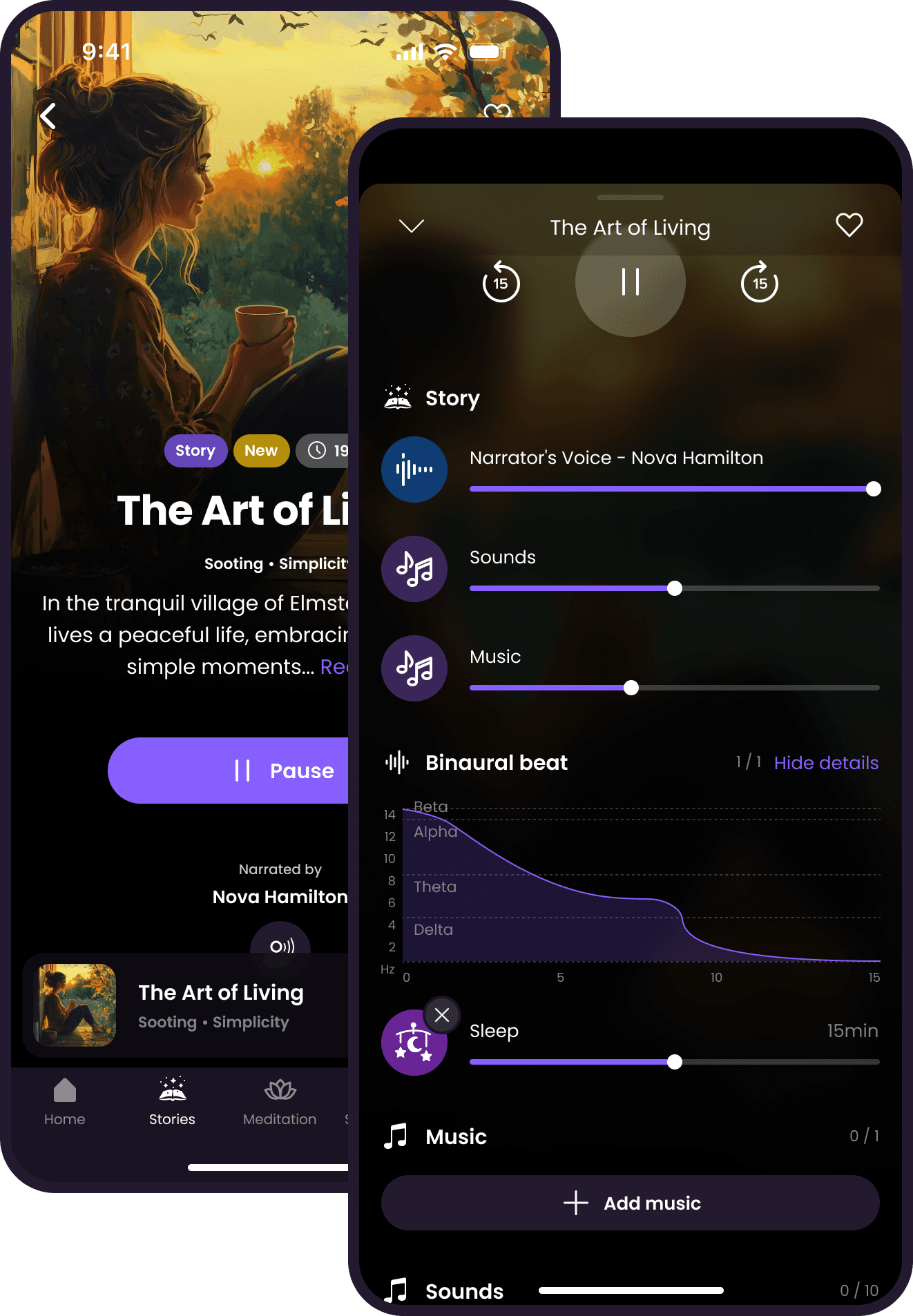
Combine natural sounds, calming music, and binaural beats for a unique auditory experience.
Soundscape Collections
Mix and match soothing sounds and binaural beats to craft a personalized sleep experience. Save and play your custom blends anytime.
Try now NightWhisper app
Scientific References for Binaural Beats
These studies provide scientific evidence supporting the use of binaural beats for enhancing sleep, reducing anxiety, improving focus, and facilitating meditation.
Scientific Research Studies
Wahbeh et al., 2007
Binaural Beat Technology in Humans: A Pilot Study to Assess Neuropsychologic, Physiologic, and Electroencephalographic Effects.
This study explored the effects of binaural beats on anxiety and found potential benefits in reducing self-reported anxiety levels.
Padmanabhan et al., 2005
A Prospective, Randomised, Controlled Study Examining Binaural Beat Audio and Pre-Operative Anxiety in Patients Undergoing General Anaesthesia for Day Case Surgery.
The research demonstrated that binaural beat audio significantly reduced pre-operative anxiety compared to control groups.
Lane et al., 1998
The Effects of Auditory Binaural Beats on Attention and Consciousness..
This study investigated the impact of binaural beats on attention and found that certain frequencies could enhance focus and cognitive performance.
Huang et al., 2008
Auditory Beat Stimulation and Its Effects on Cognition and Mood States.
The research examined how binaural beats affect meditation and stress reduction, indicating improvements in mood and cognitive functions.
Oster, G., 1973
Auditory Beats in the Brain.
This foundational paper introduced the concept of binaural beats and their potential to influence brainwave synchronization.